Persistent tendon pain can keep you from running, lifting, training, or doing the activities you enjoy. If rest, stretching, massage, or traditional treatment hasn’t helped, radial shockwave therapy may be the missing piece.
At Optimal Health Matters, we use radial shockwave therapy to help athletes and active adults recover from stubborn tendon pain, improve healing, and get back to doing what they love.
Shockwave Therapy for Tendon Pain & Sports Injuries
Non-Invasive Relief with Radial Pressure Wave Therapy
At Optimal Health Matters, we use advanced radial shockwave therapy to help reduce pain, improve movement, and support recovery—naturally.
This non-invasive treatment helps stimulate healing and blood flow in injured tissues, making it a great option for tendon pain, chronic injuries, and muscle tightness.
Whether you’re dealing with a lingering injury or pain that won’t go away, shockwave therapy can help you recover without surgery, injections, or downtime.
-
Achilles tendinopathy happens when the tendon becomes irritated and slow to heal from overuse. Shockwave therapy uses gentle acoustic waves to stimulate blood flow and healing in the injured tendon.
-
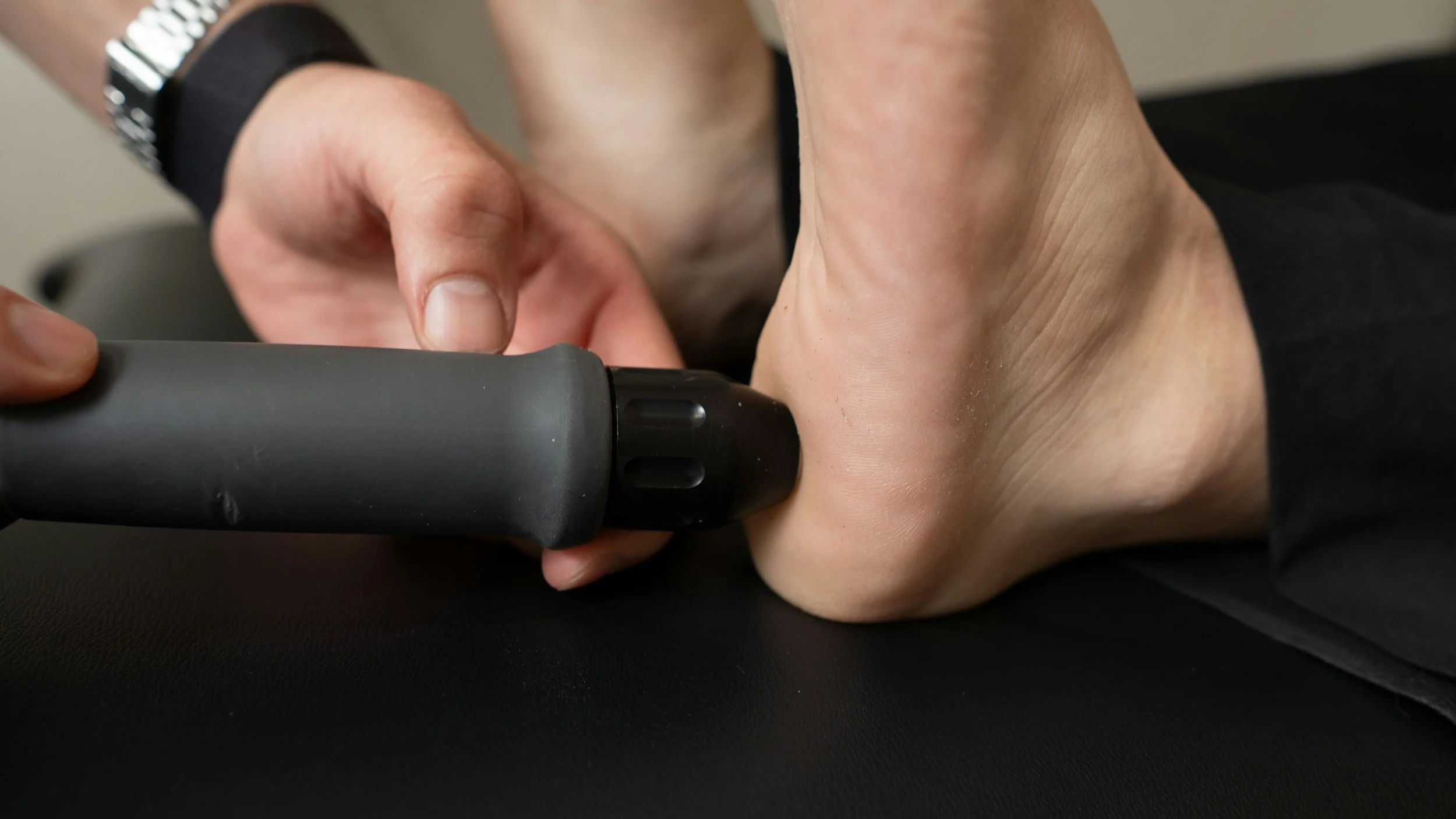
Plantar fasciitis happens when the tissue on the bottom of the foot becomes irritated and painful, often causing sharp heel pain.
Shockwave therapy helps stimulate blood flow and healing in the irritated tissue.
-
These conditions happen when the tendons around the elbow become irritated from repetitive gripping, lifting, sports, or overuse.
Shockwave therapy helps stimulate blood flow and healing in the injured tendon, which helps reduce pain and improves recovery over time.
It can be especially helpful for stubborn elbow pain that hasn’t improved with rest, braces, stretching, or other treatments.
-
Runner’s knee (patellar tendinopathy) happens when the tendon below the kneecap becomes irritated from running, jumping, or overuse.
Shockwave therapy helps stimulate healing in the tendon, reduce pain, and improve function over time.
Complimentary Consultation + 50% Off Initial Treatment
How it works
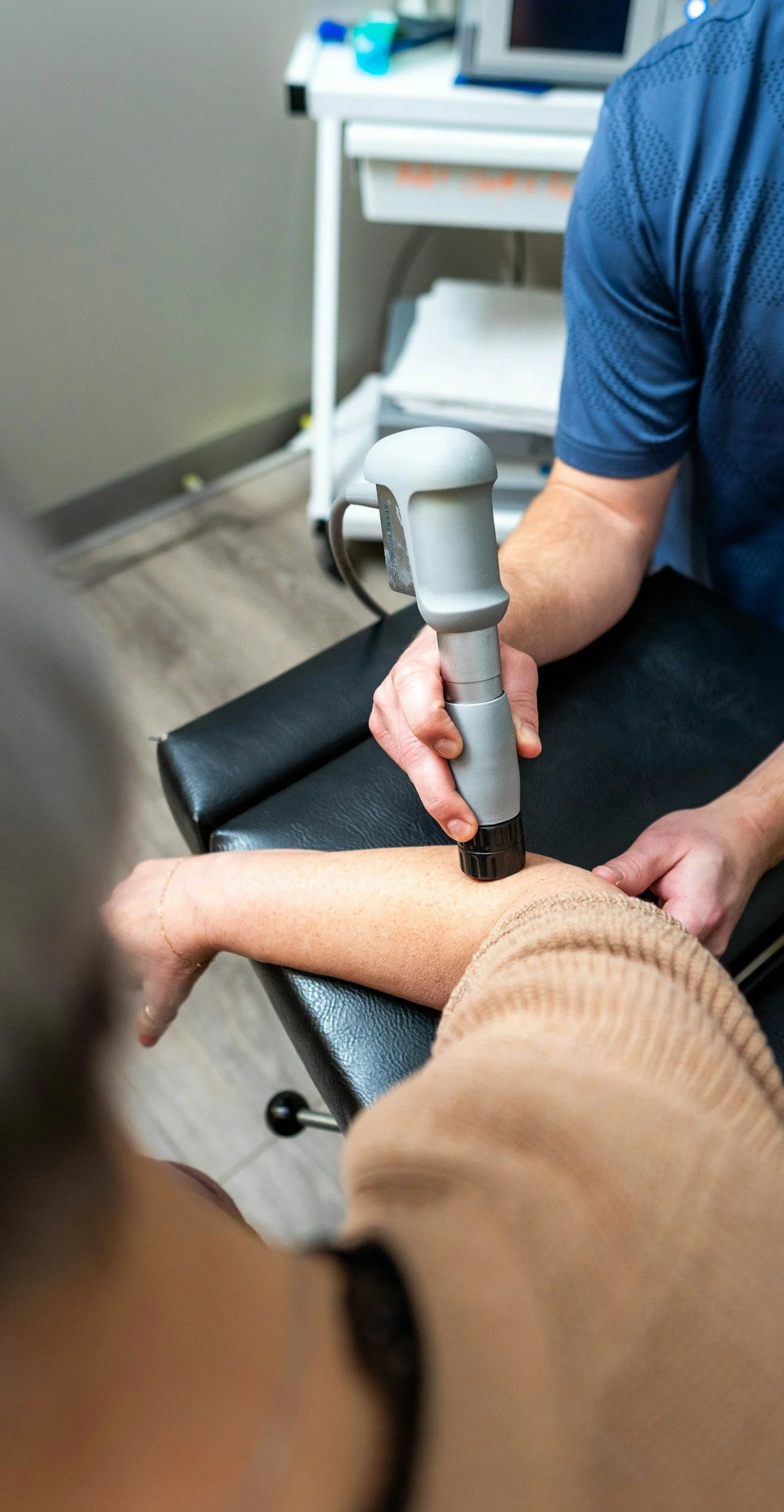
Radial Pressure Wave therapy uses compressed air to generate acoustic waves that travel outward from the applicator into the treatment area. Unlike focused shockwaves, radial waves spread over a wider surface and penetrate up to 3–4 cm deep—making them ideal for treating large muscle groups, trigger points, and surface-level conditions.
During treatment, a coupling gel is applied, and a handheld device delivers controlled pressure waves to the area. This process increases circulation, loosens tight tissues, and accelerates tissue repair.
Conditions that Radial Shockwave Therapy can treat
RPW therapy is especially effective for chronic pain, overuse injuries, and muscle dysfunction in the following areas:
-
Plantar fasciitis
Achilles tendonitis
Shin splints
-
Hamstring & calf strains
Gluteal tendonitis
Trochanteric bursitis
IT band syndrome
-
Patellar tendonitis
Runner’s knee
-
Rotator cuff sprains and tears
Calcific tendonitis
Impingement syndrome
-
Tennis elbow
Golfer’s elbow
-
Trigger points
Myofascial pain
Sacroiliac joint dysfunction
Our Process
Benefits of RSW
Non-invasive, FDA cleared, stimulates natural healing
Safe for ongoing pain management and recovery
Targets larger areas for faster results
Is RSW Safe?
Yes. Radial Pressure Wave therapy is widely used and considered very safe when administered by trained professionals. Side effects are rare and typically mild—such as temporary soreness, redness, or swelling in the treated area.
What to Expect
A typical session lasts around 15–20 minutes. Most patients report mild to moderate sensations during treatment, with many feeling relief after just a few visits. A treatment plan may include multiple sessions depending on your condition and recovery goals.
Plan with Purpose
Shockwave can be discussed with your provider as part of your overall treatment plan. At OHM, we value shared decision making to create a plan that works for you.